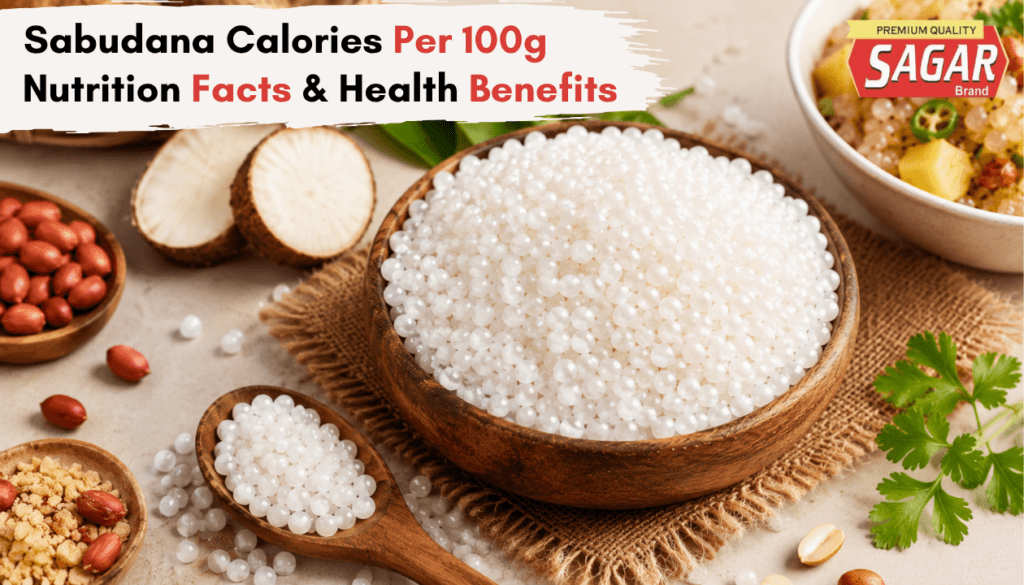
Sabudana is energy-rich, gluten-free food made from tapioca, offering quick energy, easy digestion and versatile meal options with nutritional benefits.
Sabudana is one of the most popular fasting foods in India and is widely consumed in dishes like sabudana khichdi, sabudana kheer, and sabudana papad. Known for its light texture and quick energy supply, sabudana has become a favorite among people looking for tasty and filling food options.
Whether consuming sabudana during fasting or as a regular ingredient in meals, many people want to know the calories in sabudana and its nutritional profile. Knowing the nutritional value of sabudanas can help you make healthier food choices.
In this article, we will discuss sabudana calories per 100g, nutrition facts, sabudana khane ke fayde, and explain sabudana kisse banta hai and how the sabudana is made.
Sabudana Calories & Nutrition Facts
Sabudana is mainly rich in carbohydrates and is a good source of instant energy. It contains minimal fat and protein, so it is often combined with peanuts, milk, or vegetables for a balanced diet.
Sabudana is commonly consumed through sabudana ki khichdi, sabudana kheer, and snacks during fasting. Knowing the calorie content and nutrition facts helps people manage their diet more effectively and enjoy sabudana in moderation.
Calories & Nutrition Table
| Nutrient | Per 100g Sabudana | 1 Bowl/Cup (Approx. 150g Cooked) |
| Calories | 350–360 kcal | 180–220 kcal |
| Carbohydrates | 85–88g | 40–45g |
| Protein | 0.5–1g | 0.5g |
| Fat | 0.2–0.5g | 1–2g |
| Fiber | 0.5g | 1g |
| Calcium | 10–20mg | 15–25mg |
| Iron | 1–2mg | 1mg |
| Sodium | Very Low | Low |
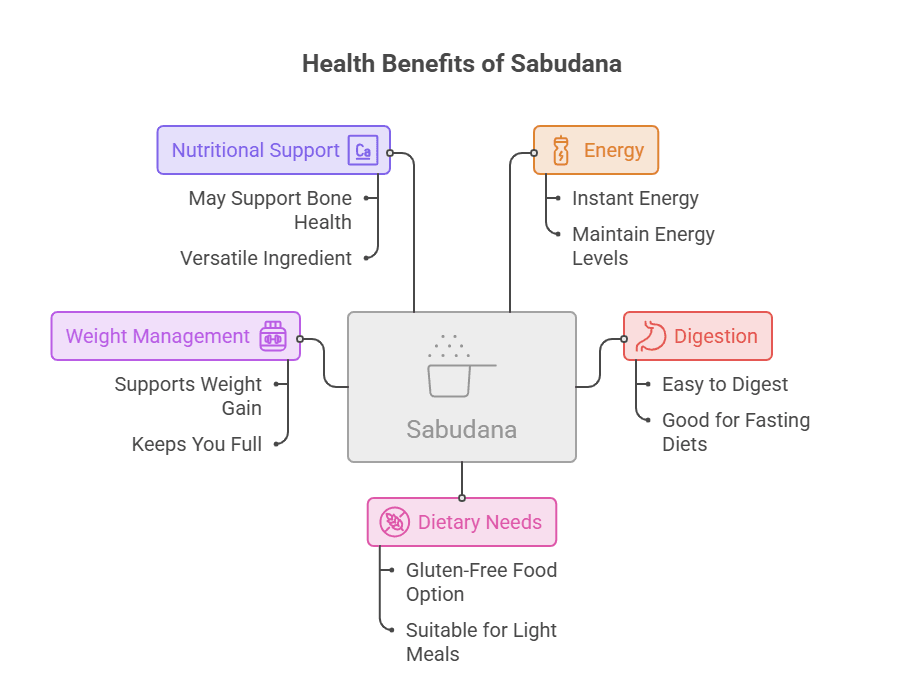
10 Health Benefits of Sabudana
1. Provides Instant Energy
Sabudana is rich in carbohydrates that quickly convert into energy.
This makes it an excellent food choice during fasting, workouts, travel, and physically demanding activities.
2. Easy to Digest
Sabudana is light on the stomach and easy to digest.
It is often preferred by people recovering from illness or those with sensitive digestive systems.
3. Good for Fasting Diets
Sabudana is widely consumed during fasting because it keeps the body energized and helps reduce hunger for longer periods throughout the day.
4. Supports Weight Gain
Due to their high calorie and carbohydrate content, sabudanas may promote healthy weight gain when consumed regularly as part of a balanced diet.
5. Helps Maintain Energy Levels
Sabudana provides sustained energy and helps reduce fatigue.
Active individuals and athletes often include it in meals for better endurance and performance.
6. Gluten-Free Food Option
Sabudana is naturally gluten free, making it a nutritional option suitable for those sensitive to gluten or those following a gluten-free diet.
7. May Support Bone Health
Sabudana contains small amounts of calcium and minerals that may contribute to maintaining stronger bones and supporting overall bone health.
8. Keeps You Full
When combined with peanuts, vegetables, or milk, sabudana becomes more filling and may help control hunger and reduce unnecessary snacking.
9. Versatile Ingredient
Sabudana can be used in a variety of dishes such as sabudana khichdi, sabudana kheer, sabudana papad, etc., offering variety and deliciousness.
10. Suitable for Light Meals
Sabudana dishes are light, comforting and hearty. It’s perfect for breakfast, snack or dinner without feeling too heavy.
Is Sabudana Good for Weight Loss?
Sabudana supports weight management when consumed in moderation and prepared with healthy ingredients. It’s high in carbohydrates and calories, so portion control is important. A balanced sabudana ki khichdi made with vegetables and a limited amount of oil will help you stay full for longer.
However, excessive intake may increase calorie consumption. Therefore, sabudana can be included in a weight loss diet when consumed mindfully as part of a balanced meal plan.
Sabudana Kisse Banta Hai / How the Sabudana is Made
Many people ask, sabudana kisse banta hai or sabudana is made from what? Sabudana is made from tapioca root, also known as cassava root. The starch extracted from the root undergoes processing, washing, and drying before being shaped into small pearl-like granules.
Knowing how sabudana is made helps people appreciate the production process. First, the tapioca roots are crushed to extract the starch. The starch is then refined, partially fermented, and turned into tiny pearls.
Once dried, the pearls become sabudana, which is used in cooking. This simple but detailed process yields the familiar ingredients used in sabudana khichdi, sabudana kheer and sabudana papad.
Conclusion
Sabudana is a versatile and energy-rich food widely enjoyed in Indian households. Knowing sabudana calories per 100g and sabudana nutrition value helps people include it wisely in their diet.
From providing quick energy to being easy to digest, there are several sabudana khane ke fayde. Whether you enjoy sabudana ki khichdi, sabudana kheer or crispy sabudana papad, moderation and balanced preparation are essential to reap its nutritional benefits.
Choose Quality Food Ingredients with Sagar Brand
At Sagar Brand, we believe that quality ingredients improve the quality of food. If you are looking for premium food products and reliable sourcing solutions, Sagar Brand is committed to providing quality, freshness and reliability.
Choose Sagar Brand for dependable food products that support healthy and delicious cooking.
FAQ’s
1. How many calories are in 100g of sabudana?
Sabudana contains approximately 350–360 calories per 100g.
2. Sabudana kisse banta hai?
Sabudana is made from tapioca or cassava root starch.
3. Is sabudana good for weight loss?
Yes, when eaten in moderation and prepared with healthy ingredients.
4. Sabudana is made from which plant?
Sabudana is made from cassava, also called tapioca root.
5. What are sabudana khane ke fayde?
It provides quick energy, is easy to digest, and supports fasting nutrition.
6. Can diabetics eat sabudana?
People with diabetes should consume it in moderation due to its high carbohydrate content.
7. Is sabudana gluten-free?
Yes, sabudana is naturally gluten-free.
8. What is the best sabudana khichdi recipe?
A healthy recipe includes soaked sabudana, peanuts, curry leaves, and vegetables with limited oil.
9. Is sabudana kheer healthy?
Sabudana kheer can be nutritious when prepared with moderate sugar and milk.
10. Can sabudana papad be eaten daily?
Sabudana papad should be enjoyed occasionally as part of a balanced diet.
Reference:
https://www.metropolisindia.com/blog/preventive-healthcare/sabudana-benefits-nutritional-value